Choosing the right shelter for your horses involves more than deciding how much space they need. North Carolina horse owners must consider seasonal weather, pasture conditions, daily feeding routines, and the amount of protection their animals require. A loafing shed provides an open-sided shelter where horses can escape rain, wind, and direct sunlight, while an enclosed barn offers more controlled storage and stable space.
Both options have advantages depending on your property and management needs. This guide explains how to choose between an open loafing shed and an enclosed barn.
Key Highlights
- Loafing sheds and run-in shelters provide open access to weather protection, while enclosed barns offer individual stalls and more controlled interior spaces.
- North Carolina's hot summers, seasonal storms, and winter weather should influence your horse shelter design.
- Loafing sheds are generally easier to access and maintain, making them practical for pasture-based horse care.
- Enclosed barns provide dedicated areas for feeding, grooming, tack storage, and individual horse housing.
- The number of horses, available pasture space, and daily care routines all influence the size and layout of a horse shelter.
- Proper orientation, drainage, ventilation, and access to clean water are important considerations for either building type.
- Combining a loafing shed with an enclosed barn can provide convenient pasture access alongside dedicated storage and stable space.
What's the Difference Between a Loafing Shed and an Enclosed Barn?
The primary difference between a loafing shed and an enclosed barn is how each structure provides shelter and access. A loafing shed is an open-sided building that allows horses to enter and leave freely. An enclosed barn features more substantial walls and typically includes stalls, doors, and designated interior spaces for horse care and storage.
Both structures can provide dependable shelter, but they serve different purposes.
What Is a Loafing Shed?
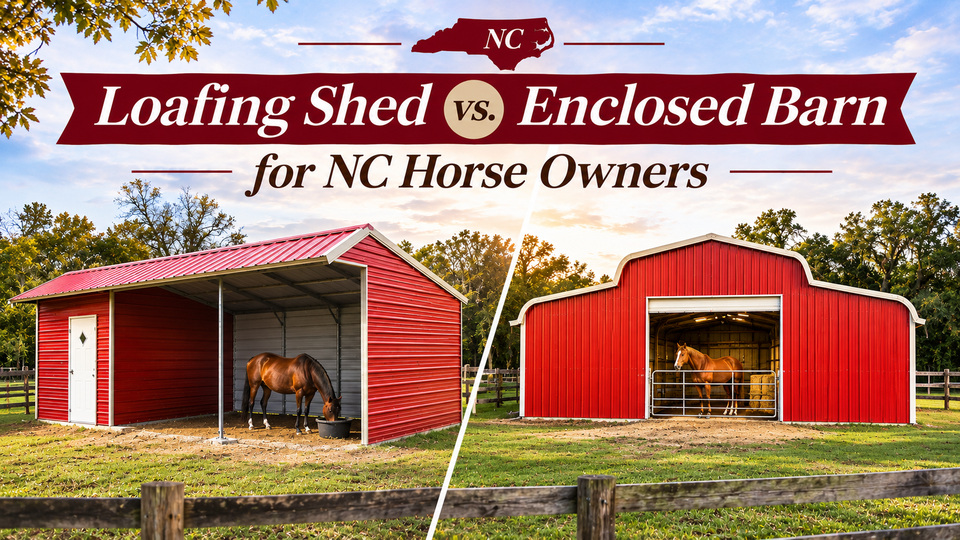
A loafing shed, also called a run-in shed, is an open-sided shelter designed to protect horses from direct sunlight, rain, and other weather conditions. Most designs feature a metal roof, three enclosed sides, and an open entrance that allows horses to move in and out without assistance.
These shelters are commonly placed in pastures where horses spend much of their time grazing. The open layout gives animals the freedom to choose when they want to enter the shelter, making it a practical option for owners who prefer pasture-based management.
Example:

What Is an Enclosed Horse Barn?
An enclosed barn provides a more controlled environment for housing horses, storing supplies, and completing daily care activities. Unlike an open-sided loafing shed, an enclosed barn uses walls and designated entrances to create separate interior spaces.
Many horse barns include individual stalls, feed storage, tack rooms, grooming areas, and equipment storage. These features make enclosed buildings useful for owners who regularly handle horses, maintain riding equipment, or need dedicated spaces for animal care.
Although enclosed barns offer additional functionality, they require more planning to maintain proper airflow, drainage, and interior conditions.
Example:

Also read: Metal Barn Size Guide: Choosing the Right Size for a North Carolina Farm
How Do Loafing Sheds and Enclosed Barns Compare for Daily Horse Care?
The best shelter for your property depends on how you manage your horses throughout the day. Some owners prioritize pasture access and simple weather protection, while others need dedicated areas for feeding, grooming, and equipment storage.
The following comparison highlights how loafing sheds and enclosed barns differ in everyday use.
| Feature | Loafing Shed | Enclosed Barn |
|---|---|---|
| Overall Design | Open-sided shelter, typically with three enclosed walls | Fully enclosed structure with designated interior spaces |
| Horse Access | Horses enter and exit freely | Horses typically enter through stall or building doors |
| Weather Protection | Provides overhead coverage and protection from prevailing weather on enclosed sides | Offers more complete protection when properly designed |
| Ventilation | Naturally ventilated through the open entrance | Requires planned windows, vents, and airflow |
| Daily Cleaning | Open layout provides convenient access for cleaning | Stalls and enclosed areas require more routine cleaning |
| Feeding | Suitable for providing hay and other feed in designated areas | Allows dedicated feeding areas and feed storage |
| Tack Storage | Limited unless additional enclosed storage is included | Can include dedicated tack rooms and cabinets |
| Horse Housing | Suitable for pasture-based groups and individual horses | Supports individual stalls and controlled housing |
| Equipment Storage | Limited by the open layout | Can accommodate equipment, tools, and supplies |
| Typical Use | Pasture shelter and shade | Horse housing, grooming, feeding, and storage |
Accessibility and Daily Maintenance
Loafing sheds provide a straightforward shelter option for horses that spend most of their time outdoors. Their open design makes it easier for animals to enter and leave throughout the day, while owners can access the shelter without navigating individual stalls.
Enclosed barns provide more control over daily routines. Individual stalls allow owners to separate horses for feeding, grooming, medical care, or other activities. However, enclosed spaces require regular cleaning and proper ventilation to maintain a comfortable environment.
Weather Protection and Ventilation
Both structures can provide valuable weather protection, but their designs respond differently to changing conditions.
A loafing shed offers shade and overhead coverage while allowing natural airflow through its open entrance. The enclosed sides can help block wind and precipitation, depending on the building's orientation.
An enclosed barn provides more protection from wind-driven rain and other outdoor conditions. However, airflow must be carefully considered, particularly during North Carolina's humid summer months. Proper ventilation helps reduce moisture buildup and supports healthier interior conditions.
Which Shelter Best Fits Your North Carolina Horse Property?
North Carolina's climate and varied property conditions make shelter selection an important part of horse ownership. Coastal properties, inland farms, and mountain pastures can experience different weather patterns, so the right building depends on your location and how you manage your animals.
When a Loafing Shed Makes More Sense
A loafing shed may be the better choice if your horses spend most of their time grazing and only need a designated place to escape the elements. These shelters work well for properties with established pastures, open grazing areas, and enough room for horses to move around freely.
Consider a loafing shed if you:
- Keep horses in pasture-based groups.
- Need a shaded area during hot summer afternoons.
- Want overhead protection from rain and seasonal storms.
- Prefer a shelter with convenient access for multiple horses.
- Already have separate areas for feed, tack, and equipment storage.
A properly positioned loafing shed can provide a useful retreat during hot, humid weather. It can also help horses avoid prolonged exposure to rain and direct sunlight.
When an Enclosed Barn Makes More Sense
An enclosed barn may be more appropriate if your property requires dedicated spaces for horse housing and daily care. For example, owners who regularly ride, train, groom, or care for multiple horses may benefit from individual stalls and enclosed storage areas.
Consider an enclosed barn if you:
- Need separate stalls for individual horses.
- Require dedicated feed and tack storage.
- Regularly groom, saddle, or prepare horses for riding.
- Need space for veterinary care or temporary separation.
- Want to store riding equipment, hay, and other supplies under one roof.
Enclosed barns also provide more flexibility for organizing different activities within one building. However, they require careful planning to maintain suitable ventilation and interior conditions.
Considering North Carolina Weather
Regardless of the structure you choose, consider the weather conditions common to your part of the state. North Carolina summers can bring high temperatures and humidity, making shade and ventilation important. Seasonal thunderstorms and heavy rainfall also make drainage and building placement important considerations.
Properties in western North Carolina may need to account for higher snowfall and colder winter conditions. Coastal and eastern areas may face stronger winds and storm exposure.
Choose a building configuration that accounts for applicable local wind and snow loads. Proper anchoring, roof design, and site preparation also contribute to long-term performance.
Also read: How to Prepare Your Metal Building for High Winds and Heavy Rain
What Should You Consider Before Choosing a Horse Shelter Layout?
Choosing between a loafing shed and an enclosed barn is only part of the planning process. You also need to consider how the structure will fit into your property and support your daily horse care routine. The following factors can help you determine the right building size, placement, and configuration.
- Number of Horses: Determine how many horses will use the shelter. Multiple horses need enough room to enter, stand, and rest without crowding. Consider adding space for future animals if your property may expand.
- Building Dimensions: Measure the available property area and choose dimensions that accommodate your horses and intended activities. A small three-sided shelter may work for a few horses, while a larger property may benefit from multiple shelters or an expanded building.
- Pasture Placement: Position loafing sheds where horses can reach them easily from their grazing areas. Avoid locations that create narrow access points or interfere with established fencing and gates.
- Building Orientation: Consider prevailing winds, sunlight exposure, and the direction of incoming rain. Positioning the open side away from prevailing winds can help improve shelter during unfavorable weather.
- Drainage and Ground Conditions: Choose a relatively elevated location with suitable drainage. Avoid low-lying areas where rainwater can collect and create muddy conditions around the shelter.
- Feed and Water Access: Make sure horses can reach clean water and feeding areas without unnecessary obstacles. Position feeders where horses have enough room to eat comfortably.
- Storage Requirements: Determine whether you need space for hay, feed, tack, grooming supplies, and maintenance equipment. A loafing shed may require a separate storage building, while an enclosed barn can incorporate these areas into its layout.
- Ventilation: Plan for adequate airflow, especially if the building will include enclosed stalls or storage rooms. Proper ventilation helps manage moisture and maintain comfortable interior conditions.
- Foundation and Site Preparation: Evaluate the soil, ground slope, and intended building use before selecting a foundation. Proper grading and anchoring help create a stable structure.
- Local Building Requirements: Review applicable zoning, permitting, setback, and building requirements before construction. Confirm the engineering specifications needed for local wind and snow conditions.
Can You Use a Run-In Horse Shed and an Enclosed Barn Together?
Yes. Combining a run-in shed with an enclosed barn can provide a flexible setup for horse owners who want both pasture access and dedicated care areas. This arrangement allows horses to spend time outdoors while having access to a sheltered area in the pasture. The enclosed barn can handle activities that require more controlled spaces, including grooming, feeding, tack storage, and individual horse housing.
This setup offers several advantages, including:
- Flexible Horse Management: Horses can access pasture shelter while owners retain dedicated areas for feeding, grooming, and handling.
- Additional Weather Protection: A separate loafing shed provides another sheltered area when horses are spending time outdoors.
- Better Storage Organization: Feed, tack, tools, and riding equipment can remain in designated areas inside the enclosed barn.
- Reduced Crowding: Separate shelters give horses additional room to move around, particularly when multiple animals share a pasture.
When planning both structures, consider the distance between them, available pasture access, fencing, and the location of water sources. Keeping the buildings conveniently accessible can make daily feeding, cleaning, and maintenance easier.
Panhandle Metals Can Help You Compare Horse Shelter Options
Finding the right horse shelter starts with understanding your property and the needs of your animals. Panhandle Metals is a leading metal building dealer based on Mount Airy, North Carolina. Our structures are fully customizable and made to accommodate different agricultural applications, including open-sided loafing sheds, run-in shelters, and enclosed barns.
These structures are constructed with premium steel and designed to provide dependable performance for years to come. Whether you need a simple three-sided shelter for pasture access or a larger enclosed barn with dedicated storage and working areas, Panhandle Metals can help you explore your options.
Ready to plan your horse shelter? Call Panhandle Metals at (336) 203-6217 to speak with a building specialist or use our 3D Designer tool to explore different building sizes and configurations. Start planning a structure that fits your North Carolina horse property.
Frequently Asked Questions
Yes. The terms loafing shed and run-in shed are commonly used interchangeably to describe an open-sided shelter that allows horses to enter and leave freely. Most designs include a roof, three enclosed sides, and an open front.
Yes, multiple horses can share a loafing shed if the structure provides enough room for each animal to enter, stand, and rest comfortably. The number of horses a shelter can accommodate depends on its dimensions, the animals' sizes, and their behavior around one another.
The open side of a loafing shed should generally face away from prevailing winds and the direction of the most frequent wind-driven rain. In North Carolina, local weather patterns and property conditions should influence the final orientation. Consider sunlight exposure, drainage, and pasture access when choosing the building location.
A basic open-sided loafing shed is primarily designed for horse shelter rather than secure storage. While you may be able to incorporate a separate enclosed section, feed and tack are generally better kept in a dry, secure storage area. An enclosed barn or dedicated storage building provides more suitable space for protecting these supplies from moisture and unwanted access.
The appropriate size depends on the horses' breeds, sizes, and how much time they spend inside the shelter. A 12x24 structure provides 288 square feet and may serve as a starting point for planning a small group shelter. Larger horses or properties with additional animals may require more space. Make sure the entrance and interior allow both horses to move comfortably.
Yes. Properly designed metal loafing sheds can provide dependable protection from sunlight, rain, and seasonal weather.
Yes. Adequate ventilation is important in enclosed horse barns because moisture, dust, and odors can accumulate inside poorly ventilated spaces. Plan for appropriate windows, vents, and airflow throughout the building.