


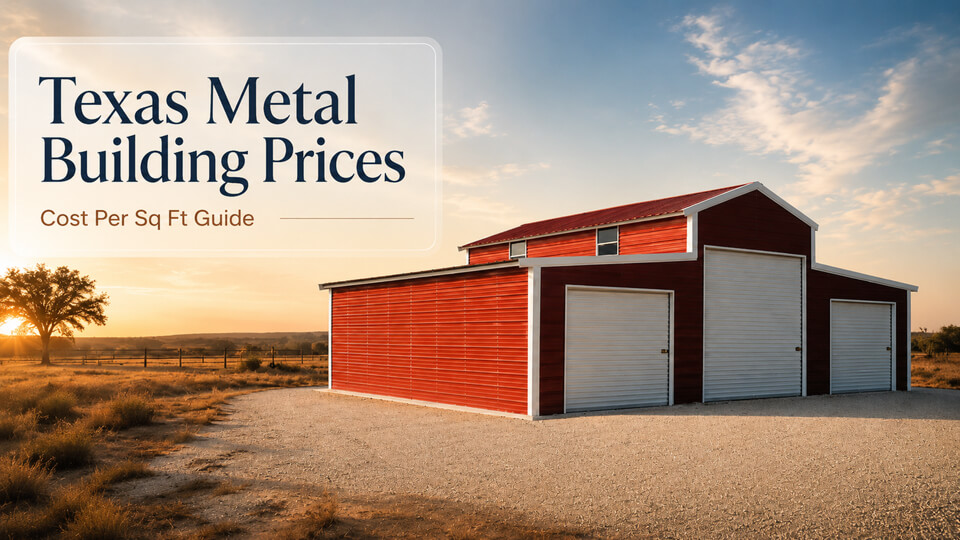
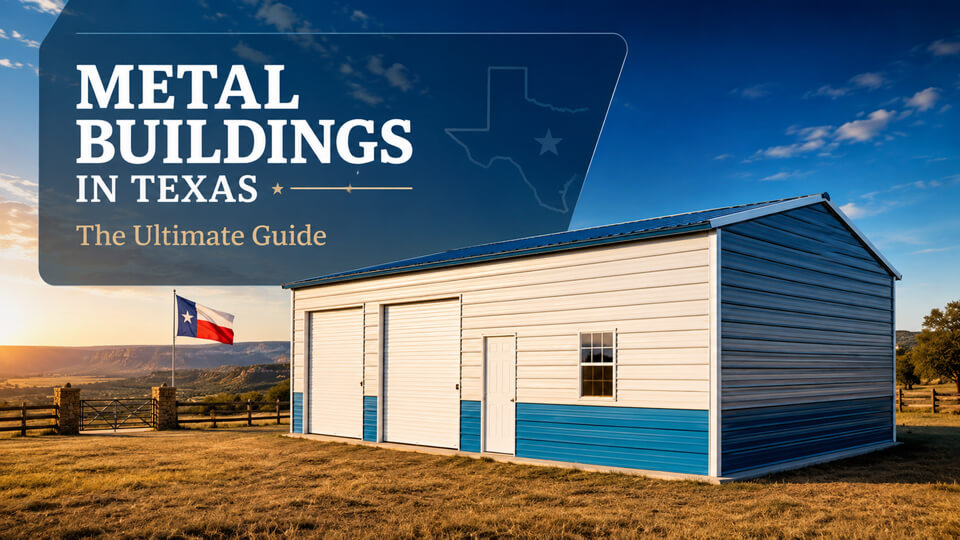
Metal buildings are everywhere in Texas. You’ll see them sitting behind homes, out on ranch land, beside small businesses, and stretched across commercial properties. Texas metal buildings are used for things like equipment storage, vehicle protection, workshops, feed storage, and sometimes just clearing out space that a garage can’t handle anymore.
What makes them so common is pretty simple. They’re practical. You don’t wait forever for them, and they can be built around what you actually need instead of forcing you into a one-size structure.
This guide walks through the basics: what they cost in Texas, the sizes people usually choose, roof styles, and a few things worth thinking about before placing an order.
Key Highlights
- Metal buildings are used across Texas for storage, barns, garages, and commercial setups.
- Pricing shifts based on size, features, site conditions, and location.
- Small buildings usually cover basic storage and backyard use.
- Medium and large structures are common for ranches, vehicles, and business operations.
- Roof style matters more in Texas because of wind, heat, and storm exposure.
- Local permits can change depending on the county.
- Custom quotes tend to reflect real project costs better than online estimates.
How Much Do Metal Buildings Cost in Texas?
There’s no clean, universal price for a metal building in Texas. A small storage unit and a full-size workshop aren’t even in the same category, so expecting a single number doesn’t really work.
Most pricing comes down to how the building is being used, how it’s built, and what kind of upgrades are added along the way.
What Affects the Cost?
A few things usually move the price more than anything else:
- Size of the structure - bigger footprint, more steel, more labor.
- Design choices - roof type, height, and layout changes all matter.
- Add-ons - doors, insulation, windows, lean-tos, and interior upgrades add cost quickly.
- Site conditions - uneven ground or prep work can change installation needs.
- Delivery distance - location inside Texas can affect logistics and setup.
Nothing here is hidden or unusual. It just depends on how simple or detailed the build becomes.
Why Custom Quotes Beat Online Pricing
Online pricing usually shows a “base model,” not the version most people actually end up ordering.
A custom quote is closer to reality. It factors in your land, your layout, and how you plan to use the space. It’s not just about price. It’s about avoiding surprises once the build starts moving forward.
Popular Metal Building Sizes in Texas
Sizes vary a lot across Texas because property use varies just as much. A backyard setup in a suburban area looks nothing like a ranch built outside town.
Small Metal Buildings for Storage and Backyard Use
Small buildings are often used when things start piling up faster than expected.
Typical uses include:
- Lawn equipment
- Tools that don’t belong in the garage anymore
- ATVs
- Small workshop setups
- General backyard storage
They don’t take much space, but they make a noticeable difference in keeping things organized.
Medium-Sized Metal Buildings for Garages, RV Covers, and Farm Use
This is where things start to feel more flexible. You get room to breathe without jumping into a massive structure.
Common uses:
- 2-car garages
- RV covers
- Boat storage
- Tractor parking
- Hobby or repair shops
- Hay and feed storage
A lot of Texas property owners land in this size range because it balances cost and usefulness pretty well.
Large-Scale Metal Buildings for Commercial Projects, Ranch, and Warehouse Use
Large buildings are where things open up completely. These are not “extra storage” structures, they’re working buildings.
Often used for:
- Commercial storage
- Agricultural equipment
- Warehouses
- Riding arenas
- Shop spaces
- Multi-bay garages
At this level, the building usually becomes part of daily operations rather than just storage.
Which Roof Style is Best for Texas Metal Buildings?
Roof style isn’t just cosmetic in Texas. Weather plays a real role here. The sun, wind, heavy rain, and the occasional rough storm season all put pressure on a structure.
Some designs handle that better than others, depending on how and where the building sits.
Regular Roofs
Regular roofs are usually chosen when cost is the main concern. They’re simple and get the job done for basic storage setups or smaller buildings.
A-Frame Roofs
A-frame roofs feel more traditional. The peaked structure gives a more “house-like” appearance and is often used for garages or workshops where appearance matters a bit more.
Vertical Roofs
Vertical roofs are built for movement. Rain and debris don’t sit on them the same way because of the panel direction. In Texas, that makes them a strong long-term option for buildings exposed to heavier weather conditions.
What to Know Before Buying a Metal Building in Texas
Buying a metal building isn’t something most people do often, so it’s easy to overlook small details that end up mattering later.
A little planning before ordering usually saves trouble during installation.
Choose Your Building Based on Purpose
Start with what the building is actually for. Storage is one thing. Livestock, business operations, or equipment housing are something else entirely. The use drives everything, including size, layout, and even roof style.
Measure Site Before Ordering
This step gets skipped more often than it should. Measure more than once if needed.
Think about access too. Delivery trucks need room, not just the building footprint.
Ask About Permits in Your County
Texas doesn’t run on one uniform rulebook for this. Some counties are strict, others are more relaxed. It’s worth checking early so nothing gets delayed later on.
Choose a Financing or RTO Plan
Not every buyer wants to pay everything upfront. Financing or rent-to-own options are common for larger builds and can make projects easier to manage financially.
Metal Building Buying Checklist for Texas Customers
| Decision | What the buyer should decide | Why it matters |
|---|---|---|
| Main use | Garage, barn, RV cover, shop, storage, commercial | Determines size, height, enclosure, and access |
| Size | Width x length x height | Dimensions are measured width x length x height. |
| Roof style | Regular, boxed eave, or vertical | Affects appearance, drainage, and budget |
| Enclosure | Open, partially enclosed, fully enclosed | Affects weather protection and price |
| Doors and windows | Garage doors, walk-in doors, windows | Affects access and daily use |
| Foundation | Ground, gravel, concrete, or other prepared surface | Affects anchoring and site prep |
| Permits | City or county requirements | Prevents delays before installation |
| Budget plan | Pay upfront, finance, or RTO | Helps the buyer choose the right path |
Conclusion
Metal buildings stay popular in Texas for one simple reason: they solve space problems without overcomplicating the process. Whether it’s a small backyard unit or a large commercial structure, they can be shaped around the job instead of forcing the job to fit the building.
The real value comes from planning before ordering. Size, placement, and roof style all matter more than people expect at first. Getting those decisions right early makes everything else smoother.
Why Choose Panhandle Metals for Metal Buildings in Texas
Panhandle Metals provides metal buildings designed for Texas conditions. Whether it’s heat, wind, or long seasons, our structures are made to go the distance for your next big project.
When you work with us, you get:
- Delivery and installation included.
- Certified wind and snow-rated buildings.
- Local permitting knowledge.
- Customer support that actually stays involved.
From small storage builds to large-scale projects, we help guide the process from start to finish. Reach out when you’re ready to plan your build.
Call us today at (806) 731-4815 for more information on our buildings and how to make one yours.
Frequently Asked Questions
It depends on size, design, and what you add to it. Smaller buildings are much more affordable than large custom structures, and most projects land somewhere in between.
Start with what you’re storing or using it for. It’s usually better to go slightly larger than to run out of space too soon.
Vertical roofs are often chosen because they handle weather better, especially rain and debris.
It depends on the county and building size. Always worth checking before ordering.
Yes, installation is included with delivery for most projects.
Have the site ready, confirm measurements, and make sure access is clear for delivery and setup.